Tech M&A when capital is costly: which strategic rationales still stand
When the cost of capital rises, the rationale behind tech M&A deals shifts from a growth story to the logic of cash flow and measurable margins.

The sources provided for this piece were empty, so the analysis below builds an analytical framework based on the general mechanics of the tech M&A market, without reference to any specific deal or figure. Any named data will require filing confirmation before publication.
Why deal logic changes when capital gets expensive
When the cost of capital is low, a buyer can justify a high multiple with expectations of revenue growth stretching out over many years. When the cost of capital rises, those same future cash flows get discounted more heavily, pulling fair valuation down. As a result, a deal’s rationale has to shift: from a story about future market share to the ability to generate measurable cash flow synergies within 12 to 24 months.
A serious buyer in this environment typically answers three questions in the materials presented to the board. How much does the deal contribute to consolidated EBITDA after subtracting integration costs. Whether the synergies come from cutting duplicate costs or from cross-selling into the existing customer base, since the two carry very different levels of certainty. And whether the post-merger cap table causes significant dilution for existing shareholders.
Two types of rationale, two levels of reliability
Cost synergies—for example, consolidating cloud infrastructure, cutting back-office headcount overlap, merging supplier contracts—are usually easier to quantify and easier to achieve. This is the kind of rationale an analyst can verify by working backward from cost reports.
Revenue synergies—the expectation of selling the acquired company’s products into the buyer’s customer base—are much harder to prove and are often overstated in announcements. When evaluating a deal, how much the purchase price depends on revenue synergies is a signal that warrants close scrutiny. If most of the premium is justified by cross-selling that hasn’t yet happened, execution risk is high.
What to read in the filing
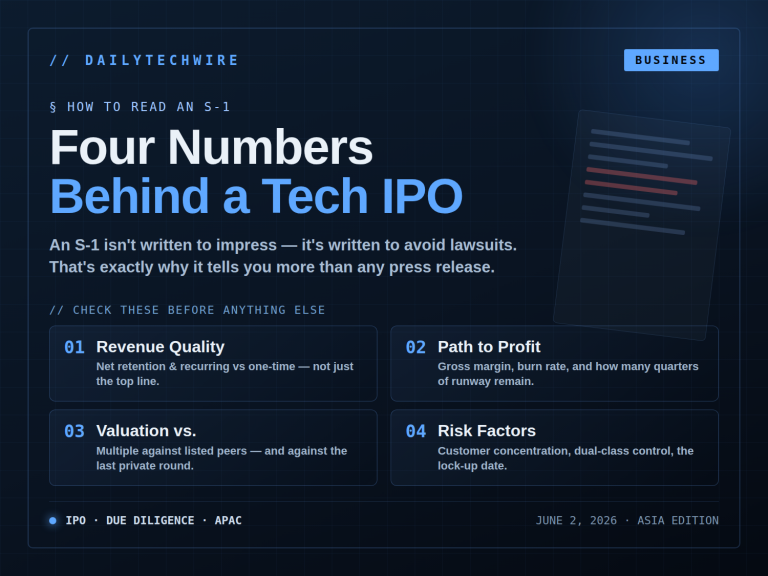
A deal’s press release usually emphasizes the vision. The filing talks about the structure of the money. Look at the ratio of cash to stock in the purchase price, since an all-stock structure shifts valuation risk onto the seller’s shareholders. Look at the earn-out provisions, which indicate that the buyer itself isn’t sure about the value and therefore ties part of the payment to future results. And look at the assumptions about one-time integration costs, an item that is frequently underestimated.
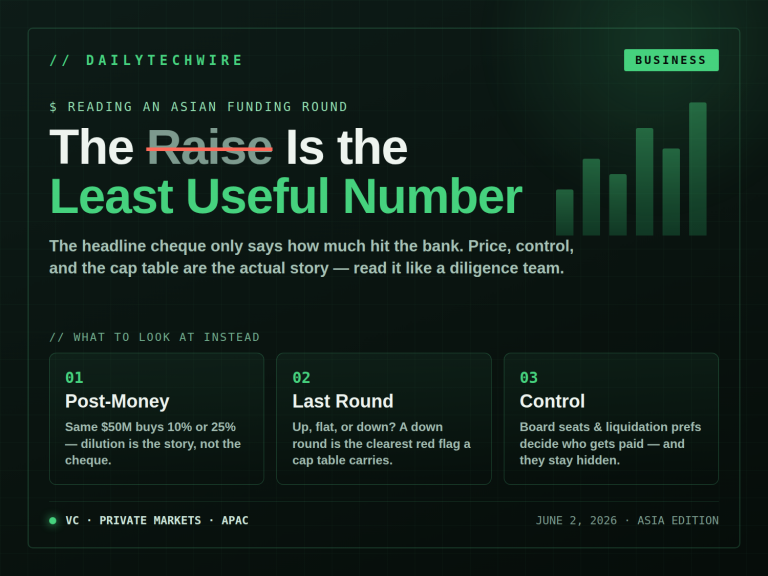
Another useful indicator is comparing the deal’s EV/sales or multiple against the most recent comparable transactions and against the acquired company’s own previous funding round. If the purchase price is markedly lower than the most recent round, it may be a down round packaged as an exit—a signal about the seller’s health rather than about the buyer’s ambition.
Asia angle
For investors and acquirers in the Asia-Pacific region, the direction in which capital is moving is worth watching more than the deal headline itself. When valuations in developed markets compress, some regional buyers may seek tech assets at more reasonable multiples, while capital from the region may also flow outward to acquire capabilities that domestic markets lack. The direction of the money—into or out of Asia—together with whether the transaction is structured in cash or stock, says more about valuation conviction than any strategic statement.
When a specific deal has a public filing, the framework above can be applied to check whether the stated rationale matches the actual structure of the money.