Asia Funding Tracker: A Quiet Week as Investors Hold Out for Cleaner Cap Tables
No verified Asia deals surfaced this week, so the tracker focuses on what regional late-stage capital is now pricing for, and how to read a round when the numbers land.

No verified deal disclosures were available for this week's tracker, so the figures normally listed here, lead investors, round sizes, and post-money valuations, are not reported below. Fabricating them would defeat the purpose of a tracker. Instead, here is the structural backdrop that frames how any new Asia round should be read when the filings do land.
What the absence of headline deals tends to signal
A thin week is not, by itself, evidence of a frozen market. Disclosure timing in Asia clusters around quarter-ends and around the closing of anchor commitments, so gaps between visible rounds are routine. The more relevant question for an analyst is not whether deals happened, but at what terms they would clear if announced.
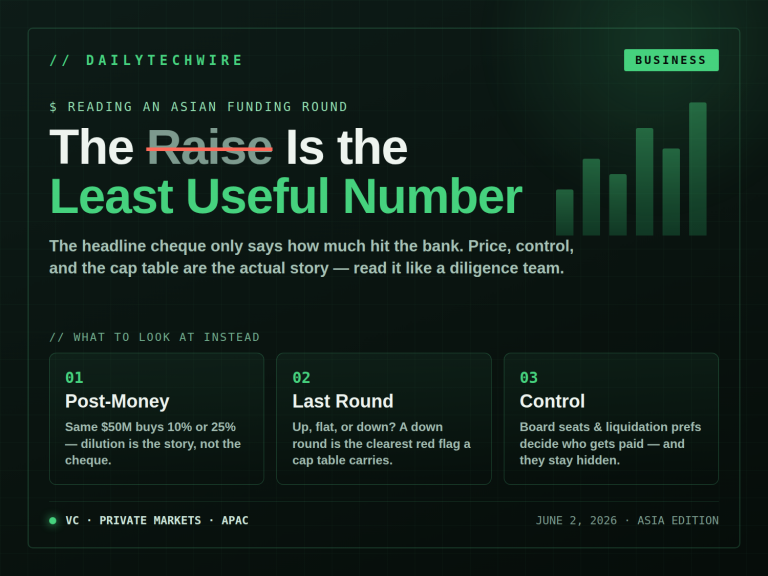
Across the region's growth and late-stage segments, the negotiating posture has shifted toward investors. That shows up less in headline valuations and more in the structure of rounds: liquidation preferences, ratchets, and tighter information rights that protect the lead if a company underperforms its plan. A round can be announced as flat or up while carrying terms that function as a down round on a fully diluted basis.
How to read a round when the numbers arrive
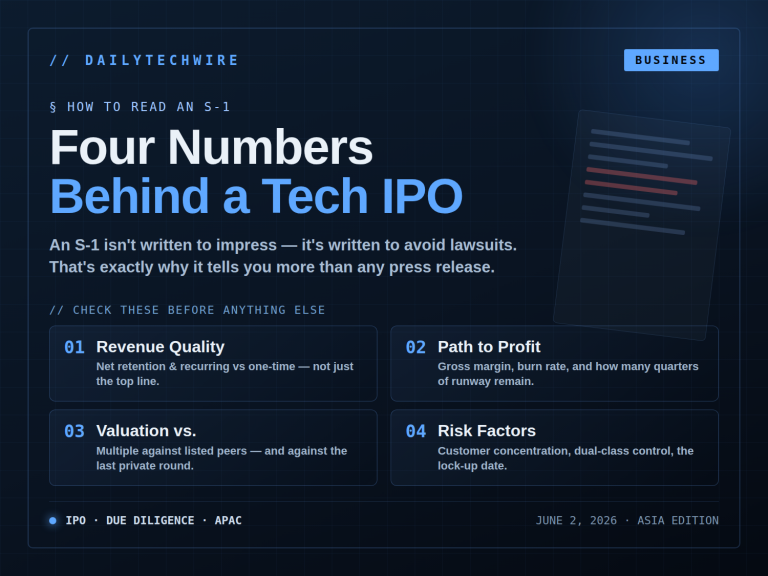
For any deal that surfaces, the checklist is consistent. First, separate the post-money valuation from the structure. A reported valuation tells you little until you know the preference stack sitting above common equity. Second, compare the multiple, whether EV/sales for revenue-stage companies or a forward ARR multiple for software, against the prior round and against listed comparables, not against the company's own narrative.
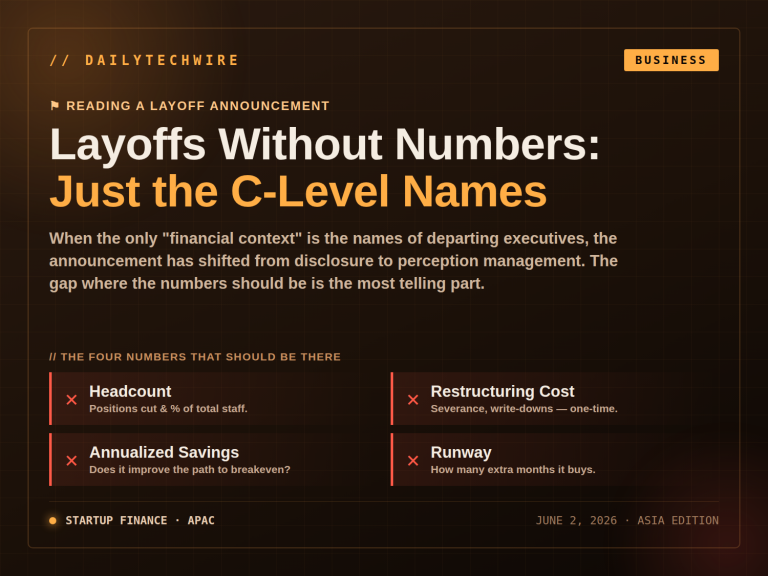
Third, look at burn rate against the new runway implied by the raise. A large round that buys only twelve to eighteen months of runway is a different signal than the same amount buying three years. Fourth, identify the lead investor and whether existing backers participated pro rata. A round where prior insiders sit out, or where the lead is new to the cap table at a discount, often carries information that the press release does not.
The Asia capital-flow context
The broader picture for the region remains one of selective deployment. Capital has not left, but it has become more discriminating about geography and sector, with later-stage cheques concentrating around companies that can show a path to operating margin rather than top-line growth alone. Cross-border flows continue to move toward markets with clearer exit paths, which keeps IPO-readiness and secondary liquidity central to how growth-stage deals get priced.
This tracker will resume with verified deal data, named leads, confirmed round sizes, and valuation context, as soon as primary disclosures are available. Readers should treat any round circulating without a filing or an on-record investor as unconfirmed until the cap-table details are public.