DeepSeek and Qwen narrow the gap with Western models on cost-parity.
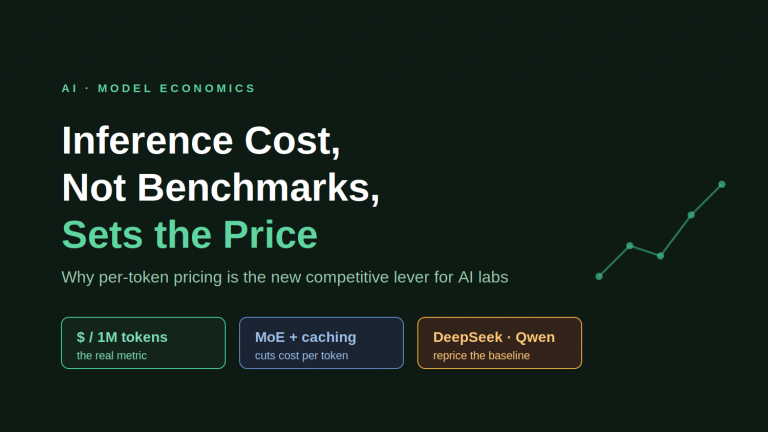
DeepSeek and Qwen are pushing inference costs down to levels that are forcing Western labs to reposition their pricing, even though a reasoning gap remains in some categories.
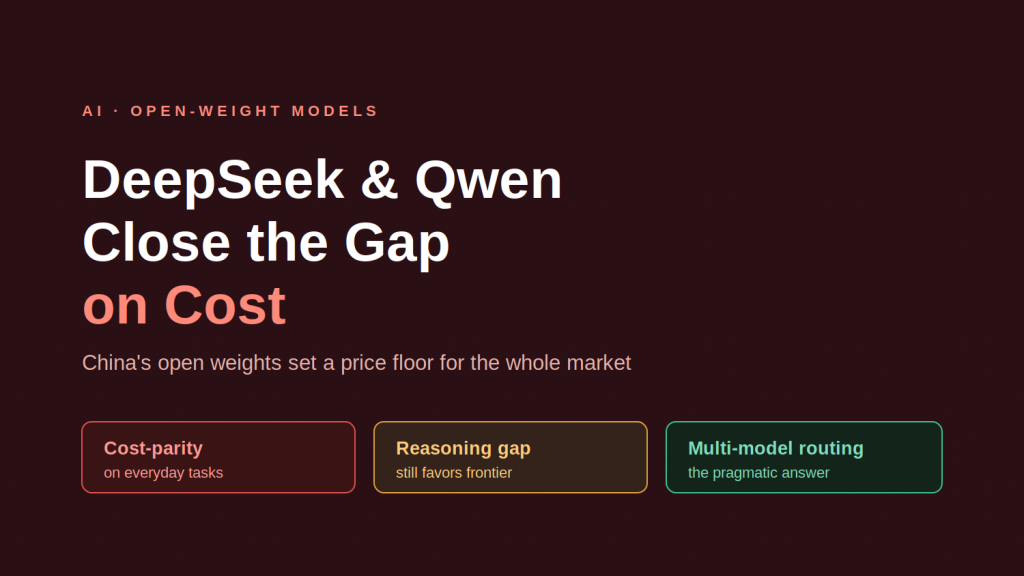
Two families of open models from China, DeepSeek and Qwen (Alibaba), are posing a clear cost-parity problem for Western labs: across most common tasks, the quality gap has narrowed enough that inference cost, rather than raw capability, has become the deciding variable.
The notable point isn’t that some model “beats” GPT or Claude on an overall leaderboard. The more practical issue: with the same token budget, a startup in Jakarta or Bangalore can run many times more inference using open-weight models released by China, while most end users can’t tell the difference in output.
The capability gap is narrowing, but unevenly
On common language tasks—summarization, writing, knowledge-style Q&A, translation—the gap between Chinese open models and Western closed models has narrowed considerably compared to two years ago. This is the area where cost becomes the main competitive factor.
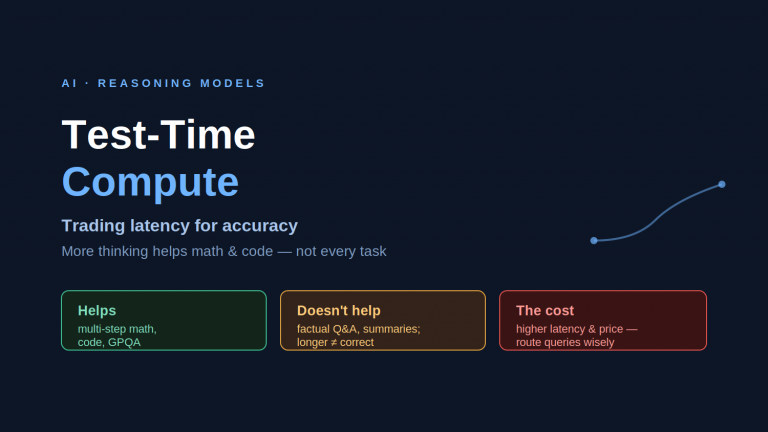
Differences remain clear in heavy reasoning and long-horizon agentic tasks: problems requiring multi-step chain-of-thought, large test-time compute, or continuous tool calls within a long session. This is where Western frontier models still hold an advantage, and also the part OpenAI emphasizes when discussing new GPT releases with expanded context windows.
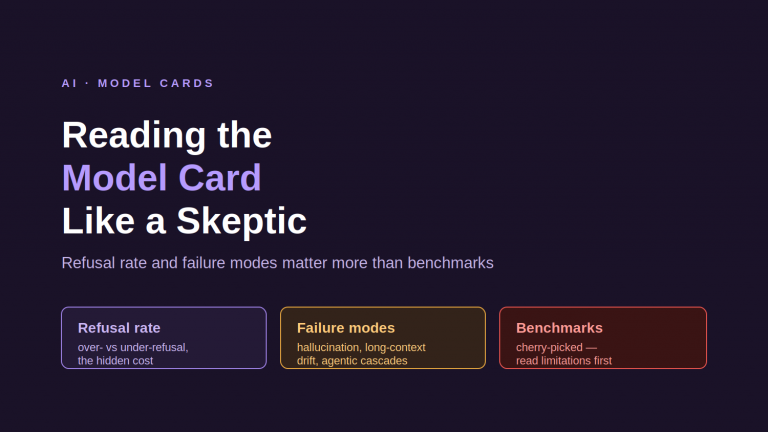
A point for caution: published benchmarks are often cherry-picked. A nice MMLU or HumanEval number doesn’t automatically translate into stable quality in production workloads, where hallucination rate, latency, and behavior on out-of-distribution tasks are what really matter.
Why the cost axis tilts toward the open camp
The cost advantage of DeepSeek and Qwen comes from three directions. First, the Mixture-of-Experts (MoE) architecture allows total parameter count to grow while activating only a portion for each token, driving inference cost down. Second, open weights let organizations self-host and optimize throughput on their own infrastructure rather than paying per API. Third, distillation from large models down to smaller variants creates a range of options by budget.
With a closed API, users pay the price set by the provider and are subject to their rate limits. With an open model, the cost variable shifts to hardware and operational skill—something some engineering teams in Asia can control better than depending on per-token USD pricing.
Competitive positioning consequences
This pressure is reshaping how Western labs tier their products. The visible trend is a clear split between high-priced frontier models for reasoning and agentic tasks, and small, cheap, low-latency variants for high volume. Expanding the context window and pushing agentic capability is the way to hold an advantage in the part that cost-parity hasn’t yet reached.
The limits of the “cheap wins” argument also need to be stated plainly. Self-hosting isn’t free: it demands GPUs, an operations team, and hidden costs in maintenance and compliance. For many small startups, a closed API is still cheaper in total cost of ownership once staffing is included.
A perspective for Asian developers
For engineering teams in the APAC region, the pragmatic conclusion isn’t to pick one side. A multi-model architecture—routing simple tasks to low-cost open models and reserving hard reasoning tasks for frontier models—is currently the most well-grounded way to optimize cost. China’s open weights create a practical price floor that helps all parties negotiate pricing better, even if a team ultimately still chooses a Western API.
What to measure before committing: hallucination rate on internal data, stability on out-of-distribution tasks, and total cost of ownership including operations. Public leaderboards are a starting point, not a conclusion.